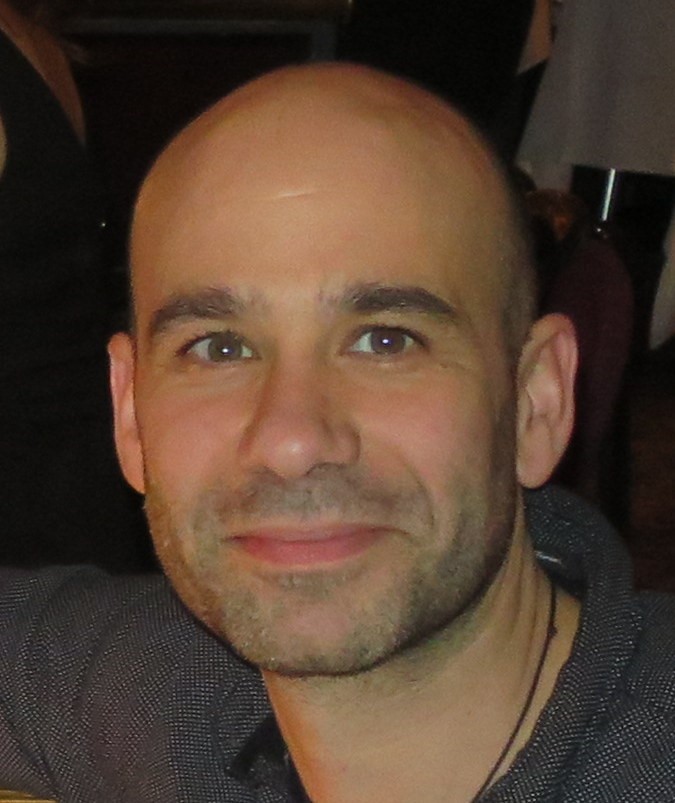
Julien Poublanc received his BSc in Physics and his MSc in Medical Imaging (Structural, metabolic and functional) from Université Paul-Sabatier in Toulouse, France, in 2001. He completed his final year of undergraduate studies as an exchange student at the University of Waterloo and carried out his MSc research project, “Perfusion and Cerebral Activation Using Arterial Spin Labeling,” at Toronto Western Hospital.
Following his graduate studies, he joined University Health Network (UHN) as a research assistant, where he analyzed MRI data and developed processing pipelines for a wide range of MRI modalities, including diffusion, fMRI, DSC, DCE, CVR, and structural imaging. During this time, he developed strong expertise in neuroimaging software such as FSL and AFNI. His work focused particularly on cerebrovascular reactivity (CVR), contributing actively to its research, methodological development, and clinical application in patients with vascular diseases. He has also worked on projects involving partial volume correction in CVR and perfusion imaging, as well as perfusion studies using deoxyhemoglobin (dHb) boluses generated through hypoxic challenges.
In 2023, he joined the Brain-TO Lab. His current work focuses on DSC analysis and the development of an automated method for arterial input function (AIF) extraction, initially prototyped in AFNI. This project has since evolved into a standalone Python-based software package for the processing and interactive visualization of DSC and CVR data, including the full workflow from standard preprocessing to parametric map generation, ROI drawing, and signal averaging.
Outside of his scientific work, Julien has a strong interest in film and visual arts. His abstract paintings are represented by Arta Gallery in Toronto’s Distillery District.
Search for Julien Poublanc's papers on the Publications page